

Apartment sale - How to sell quickly?
In Brief
A quick apartment sale means closing a transaction within 7-30 days, often at 70-85% of market value. The three main routes are: direct buyer (fastest, 7-14 days), broker with a quick-sale price (30-60 days, lower price) or forced sale (last resort, biggest price loss). This guide explains the entire process step by step: how pricing is formed, which documents you need, how the notarial transaction works and how to avoid the most common mistakes.
Introduction
As of 2026, the Estonian real estate market has become much more difficult for sellers than during the boom years of 2021-2022. Selling times have increased - in Tallinn, the average is 90-180 days, and in Tartu, often over 120 days. Interest rates are high and the number of buyers has decreased.
If your situation does not allow you to wait for months - inheritance, divorce, debt, a job abroad or simply the wish to get rid of a problematic asset - then a quick sale is often the only sensible solution.
This guide gives you a complete overview of how to sell an apartment within 2 weeks to 1 month, how large the price difference is, what the process looks like and which mistakes to avoid. It is based on our 87 transactions in 2025 and experience across Estonia.
Important note: This article is an informative overview. Every situation is unique, and for a specific transaction we recommend consulting a notary or attorney.
Who is this guide useful for?
A quick sale makes sense in the following situations:
Inheritance: You inherited an apartment (from a grandmother, father, relative), but you live elsewhere, do not want to renovate it or need money
Divorce: You need to divide jointly owned property with your spouse and neither of you wants to keep the apartment
Debt: A housing loan, apartment association debt or other financial pressure forces you to sell quickly before a forced sale
Emigration: You are moving abroad (to Finland, Germany, etc.) and need to get things in order before leaving
Problematic real estate: The apartment is in poor condition, needs a major renovation or has other complications
Life change: You are moving to another city, want a smaller/larger home or want to simplify your life
If you belong to one or more of these categories, this guide is for you.
What is a "quick sale" in real estate?
A quick sale means closing a real estate transaction within 7-30 days, often below market price as a compromise for speed.
Three main routes
Route | Time | Price compared to market value | Best suited for |
|---|---|---|---|
Direct buyer (operational buyer) | 7-14 days | 70-85% | You need money quickly, without stress |
Broker with a "quick-sale price" | 30-60 days | 80-90% | You can wait and are comfortable with negotiations |
Forced sale (through court) | 6-12 months | 50-70% | Last resort in case of debt |
Time
Direct buyer (operational buyer)
7-14 days
Broker with a "quick-sale price"
30-60 days
Forced sale (through court)
6-12 months
Price compared to market value
Direct buyer (operational buyer)
70-85%
Broker with a "quick-sale price"
80-90%
Forced sale (through court)
50-70%
Best suited for
Direct buyer (operational buyer)
You need money quickly, without stress
Broker with a "quick-sale price"
You can wait and are comfortable with negotiations
Forced sale (through court)
Last resort in case of debt
The main focus of this guide is the direct buyer route, because it is the fastest and most controllable option for the seller.
Why is a direct buyer faster than a broker?
A broker mediates the sale: they look for a third-party buyer. This takes time - listing, viewings, negotiations and finally the notary. A typical transaction through a broker takes 2-6 months.
A direct buyer buys the apartment themselves. No mediation, no listing and no unknown viewers in your apartment. The buyer views the apartment within 1-3 days, makes an offer within 24-48 hours and the notarial transaction takes place 7-14 days after the agreement.
Step-by-step process through a direct buyer
The following is the typical process used by most operational real estate buyers in Estonia (including us).
Step 1: Initial contact (day 1, 15-30 minutes)
You call or fill in an online form. The buyer asks for basic information:
Location and address of the apartment building
Number of rooms and approximate area (m²)
Age of the building (approximate year of construction)
Condition of the apartment (general assessment: good / average / needs renovation)
Reason for selling (to understand the urgency)
Whether the property has encumbrances (mortgage, debt, legal disputes)
At this stage, you do NOT need an exact valuation, energy performance certificate or other documents. These come later.
Step 2: Apartment viewing (days 2-5, 30-60 minutes)
The buyer visits the apartment. This is free and does not oblige you to do anything. The viewing takes place at a time that suits you - on a weekday evening, during the weekend or even via video call if you live away.
During the viewing, the buyer checks:
The actual condition of the apartment (not based on photos)
The kitchen, bathroom and overall quality of the rooms
The condition of kitchen appliances and furniture (if they remain)
The general condition of the building (stairwell, facade, elevator)
The plot and parking options
The neighbours (quiet / noisy area)
Step 3: Offer (days 3-7)
24-48 hours after the viewing, the buyer sends a specific offer. A typical offer text includes:
The offered price in euros
How the price was formed (short explanation)
Expected transaction timeline (notary date)
What is included in the price (who pays the notary fee, who covers amendment fees)
Validity period of the offer (usually 5-7 days)
Important: The offer is not binding - you can decline it or make a counteroffer. A good operational buyer can adjust the price by ±5-10% based on feedback.
Step 4: Reservation agreement (days 5-10)
Once you have accepted the offer, a reservation agreement (preliminary agreement) is signed. This is a document prepared by an attorney or notary, setting out:
The sale terms (price, timeline)
The obligations of both parties
The conditions for suspending the transaction (if unexpected obstacles arise)
The reservation fee (if any)
Some buyers pay a reservation fee (1-3% of the price) as security. Others prefer not to use a reservation fee - it depends on the buyer's practice.
Warning: Always check that the reservation agreement is bilateral - both parties must be able to terminate the agreement under certain conditions. A unilateral right of withdrawal only in favour of the buyer is a red flag.
Step 5: Notary preparation (days 7-12)
The notary prepares the sales agreement. As the seller, you need to provide the following documents:
Mandatory documents:
Identity document (ID card or passport)
Energy performance certificate (if you do not have one, it can be ordered for €100-250 and takes 5-10 days)
Land Register extract (the notary obtains this automatically)
Documents proving the right to possess the apartment (basis of ownership)
If the apartment has encumbrances:
In case of a mortgage: the bank's consent to the sale and repayment plan
In case of debt: certificate from the apartment association confirming debts or their absence
In case of inheritance: certificate of succession, notary confirmation
If you are married:
Spouse's consent to the sale (if the apartment is joint property - always required)
A good operational buyer helps you obtain the documents - this is part of the service.
Step 6: Notarial transaction (days 10-14)
The transaction takes place at the notary's office. Duration: 30-60 minutes. Both parties sign the sales agreement and the notary certifies the validity of the transaction.
The notary checks:
The identity of both parties
The terms of the sales agreement
That the seller has the right to sell the apartment
That the apartment has not been seized or disputed
That the spouse has given consent
After the transaction:
The notary sends the information to the Land Register (ownership transfer)
The buyer transfers the money to your account (based on the notary's confirmation, usually within 1-3 business days)
You hand over the apartment keys (either immediately or on the agreed date)
Step 7: Money in your account (days 12-17)
The money usually arrives 1-5 business days after the notarial transaction. Some buyers use an escrow account (an account managed by the notary), from which the money is released to the seller after the ownership entry is made in the Land Register.
Note about the 14-day right of withdrawal: Under Estonian consumer protection law, a private seller may, under certain conditions, withdraw from a transaction within 14 days. This does not apply to most real estate transactions (notarial transactions are final at the moment of signing), but always check with a notary or attorney in your specific situation.
Pricing: what affects the quick-sale price?
The quick-sale price is always lower than the result of long market negotiations. The reason is simple: the buyer takes the risk (immediate cash outlay, quick decision, without the usual months-long thorough checks) and wants a discount in return.
Typical price level in 2026
Sale option | Price compared to market value |
|---|---|
Broker, 6 months, negotiations | 90-100% |
Broker "quick-sale price", 2 months | 80-90% |
Direct buyer, 14 days | 70-85% |
Forced sale (bailiff) | 50-70% |
- Sale option
Broker, 6 months, negotiations
- Price compared to market value
90-100%
- Sale option
Broker "quick-sale price", 2 months
- Price compared to market value
80-90%
- Sale option
Direct buyer, 14 days
- Price compared to market value
70-85%
- Sale option
Forced sale (bailiff)
- Price compared to market value
50-70%
What affects the price in a direct buyer's offer?
Raises the price:
Location in a popular district (City Centre, Kalamaja, Pirita)
Good condition, recent renovation
Good property features (balcony, parking space, storage room)
Newer building (new development from 2010 onward)
No encumbrances (debts, mortgages)
Lowers the price:
Old building (1960-1980 Khrushchev-era apartment blocks without renovation)
Poor condition (needs major renovation)
Remote location
Encumbrances (mortgage, debts, legal disputes)
Specific problems (mould, moisture, structural issues)
Specific valuation formula
A typical operational buyer uses the following logic:
Market value × (0.75-0.85) − Price adjustments = Offer
Price adjustments:
- Renovation need: -€5,000 to -€30,000
- Furniture and furnishings: ±€0 to +€5,000
- Special location: +€0 to +€10,000
- Legal issues: -€2,000 to -€15,000
Example: a 50 m² 2-room apartment in Tallinn's Mustamäe district, market value €130,000, needs kitchen renovation:
€130,000 × 0.80 = €104,000 −€8,000 (kitchen renovation) = €96,000 offer
This is the quick-sale price. A broker might offer €115,000-125,000 over 6 months, but your total cost (broker commission 3% = €3,750, time spent, waiting) may make the final amount received similar.
Common mistakes and how to avoid them
Even in a quick sale, it is worth asking for 2-3 offers. Offers from different buyers may vary by €5,000-15,000. Call 2-3 operational buyers and compare.
Solution: Plan 2-3 days for collecting offers.
Some buyers pressure you with urgency - "sign today, otherwise the offer expires tomorrow." This is a red flag.
Solution: Give yourself at least 24 hours to read the agreement. If necessary, consult an attorney or notary (€50-100 consultation).
The notarial transaction can be delayed for weeks if you have not ordered the energy performance certificate or obtained your spouse's consent.
Solution: Obtain the documents immediately after accepting the offer. A good operational buyer helps you with this.
If the apartment has a mortgage, you must mention it at the beginning. The notary will find it anyway - hiding it will cause the transaction to fail because the buyer loses trust.
Solution: Be 100% transparent about your situation from the first contact.
If you sell the apartment "empty", it must be actually empty by the notary date. Leaving furniture behind at your discretion, leaving old kitchen appliances behind - all of this causes delays and disputes.
Solution: Clearly define in the agreement what remains in the apartment and what will be taken away.
If there are disputes with neighbours or the apartment association (for example, over renovation quality), mention them when the offer is being prepared. Otherwise, they will appear during due diligence and damage trust.
Solution: Honest full disclosure from the beginning.
Specific situations
Inheritance - what is different?
Selling an inherited apartment requires additional steps:
The succession procedure must be completed - you need a certificate of succession issued by a notary. The procedure typically takes 3-6 months after the deceased person's death.
Inheritance tax - Estonia does not have a classic inheritance tax, but income tax must be considered when selling later (if you sell at a higher price than the inherited value).
Several heirs - if there are other heirs, you need everyone's consent. It is easier if one heir buys out the others before selling to a third party.
Read more: "Inherited apartment - 7 steps from succession to sale"
Divorce - how is the apartment sold?
In case of divorce:
If the apartment is joint property (acquired during the marriage), you need the consent of both spouses
If there is no marital property agreement, the apartment proceeds are divided equally (50/50)
Court disputes can extend the procedure - a quick sale is often beneficial for both parties
Read more: "Apartment sale during divorce - 2026 guide"
Apartment with a mortgage - can it be sold?
Yes, it can. The process:
Get a proper balance statement from the bank (how much remains to be paid)
From the sale proceeds, the mortgage is paid first, and the rest is transferred to you
The bank gives consent to remove the mortgage
The notary ensures that payment is handled correctly
A good operational buyer knows this process.
Read more: "Apartment with a mortgage - how to sell it quickly?"
Debt - an alternative to forced sale
If you are facing a forced sale (creditor, bank, apartment association), a quick sale is almost always better. Reasons:
You get more money (75% vs 60% of market value)
You preserve your credit history
No public proceedings
The transaction is discreet
Read more: "Forced sale vs quick sale - comparison for owners"
Taxes and costs
Seller's costs in a typical transaction
Cost | Amount | Who usually pays |
|---|---|---|
Notary fee | €100-500 | Buyer (if agreed) |
State fee | 0.2% of transaction value, max ~€500 | Buyer |
Land Register amendment fee | €25 | Buyer |
Energy performance certificate | €100-250 | Seller |
Broker commission | 2-4% + VAT | Seller (if a broker was used) |
Attorney consultation | €50-500 | Seller, optional |
Amount
Notary fee
€100-500
State fee
0.2% of transaction value, max ~€500
Land Register amendment fee
€25
Energy performance certificate
€100-250
Broker commission
2-4% + VAT
Attorney consultation
€50-500
Who usually pays
Notary fee
Buyer (if agreed)
State fee
Buyer
Land Register amendment fee
Buyer
Energy performance certificate
Seller
Broker commission
Seller (if a broker was used)
Attorney consultation
Seller, optional
Note: A good operational buyer usually covers the notary fee, state fee and Land Register amendment fee. Check this in the offer text.
Taxes on the sale
If you sell the apartment at a profit (for a higher price than you bought it), you must pay income tax (22% as of 2026) on the profit.
Exceptions:
If the apartment has been your permanent residence for at least 1 year, you do not have to pay income tax
If you sell something you received for free (as a gift or inheritance), the sales price is compared to the market value at the time of gift/inheritance
Some exceptions apply to business-class apartments
Important: Consult the Estonian Tax and Customs Board or an accountant if you are unsure. Incorrect calculation may lead to an additional tax obligation later.
Read more: "Real estate tax in Estonia - everything you need to know"
Frequently asked questions
With a realistic timeline: 7-14 days from first contact to the notarial transaction. The money reaches your account 1-5 business days after the transaction, so the entire process 14-21 days. Some transactions are faster (especially if the documents are already available), some slower (inheritance cases, spouse abroad).
Yes. An operational buyer's visit, valuation and offer are free and without obligation. You owe nothing if you decline the offer.
You simply decline. No penalty, no obligation. You can look for another buyer or contact a broker.
For a direct buyer, no. We buy apartments "as is" - including old furniture, poor condition and an unrenovated kitchen. In fact, renovation is often harmful for a quick sale because your expenses exceed the price increase.
Yes, but this reduces the price by 5-15%. Reason: the buyer must take into account the obligations under the lease agreement or the cost of removing the tenant. If the lease ends soon, the impact is smaller.
The basics: identity document, energy performance certificate (if you do not have one, it can be ordered), Land Register extract (the notary obtains it). Specific situations require more documents (see the "Notary preparation" section above).
Usually yes, but it depends on the offer text. Sometimes the offer may depend on due diligence results (for example, if hidden structural problems appear). Read the offer carefully.
The notary fee depends on the apartment price - typically €100-500. In addition, there is a state fee (0.2% of the price, max €500) and a Land Register amendment fee (€25). The operational buyer usually covers these costs.
Yes. You can authorise a person in Estonia with a notarial power of attorney. Some notaries also offer video consultations. Alternatively, you can briefly come to Estonia at the time of signing.
For a direct buyer, there is no seasonal difference - we buy all year round. If you used a broker, the best time would be March-June and September-November (peak buyer activity).
Summary and next step
A quick apartment sale is a realistic option in the context of the Estonian market in 2026, especially in situations where time is more important than money. The entire process typically takes 14-21 days, the price level is 70-85% of market value, and you avoid the broker's commission (2-4%) and months of waiting.
The most important rules:
Ask for at least 2-3 offers for comparison
Be 100% transparent about your situation (debts, mortgages, disputes)
Read agreements carefully before signing and consult an attorney if necessary
Do not agree to a buyer who pressures you into a faster decision than you are comfortable with
Obtain the documents (energy performance certificate, spouse's consent) in good time
Need a specific offer?
If you are ready to take the next step, fill in the form below. We offer:
✓ Free price offer within 24 hours after the viewing
✓ Notary cooperation (we cover the notary fee and state fee)
✓ Up to 80% of market value based on a transparent formula
✓ Transaction in 7-14 days at the notary
✓ Discretion - no neighbour will know
✓ Any condition OK - old, in need of renovation, encumbered
Fill in the form and get an offer
Read More

Inherited apartment - 7 Steps from succession to sale
Selling an inherited apartment in Estonia? See 7 steps from probate to notary deal, co-heirs, documents, taxes and fast sale options.
Read more
Inheritance Tax in Estonia 2026 — What You Need to Know
Is there inheritance tax in Estonia? What taxes may apply when selling inherited property in 2026? A clear guide to income tax, land tax, VAT and the home sale exemption.
Read more
Selling a mortgaged apartment in Estonia 2026 | Step-by-step guide
Can you sell an apartment if it has a mortgage? Yes. Learn how bank consent, the notary transaction, costs, and payment flow work.
Read more
Forced Sale vs Quick Sale 2026 | What Should Property Owners Know?
Forced sale or quick sale? See how price, timing, costs, control and credit history are affected, and how a forced sale may be avoided.
Read more
Selling an apartment without an agent in 2026 | Pros and cons
Should you sell your apartment without a real estate agent? We compare self-selling, listing portals and a direct buyer: costs, time, risks and the best fit.
Read more
Selling an Apartment During Divorce 2026 | Practical Guide
Divorce and an apartment? A clear guide to joint property, mortgages, taxes, and sale options.
Read more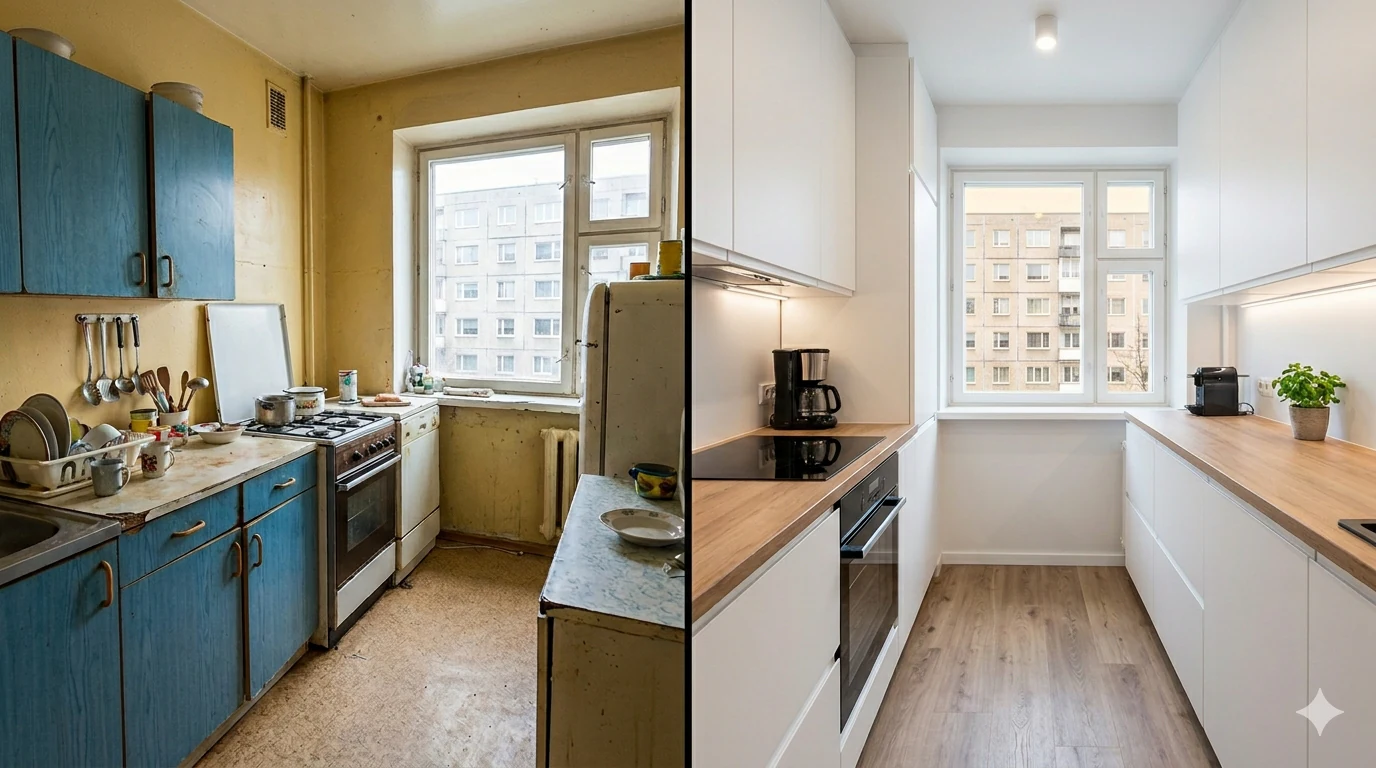
Selling an Old Apartment Without Renovating in 2026 | Guide
Want to sell an old apartment without renovating it first? It is possible. Khrushchevka, Brezhnevka or any apartment that needs work — here is when renovation makes sense and when it does not.
Read more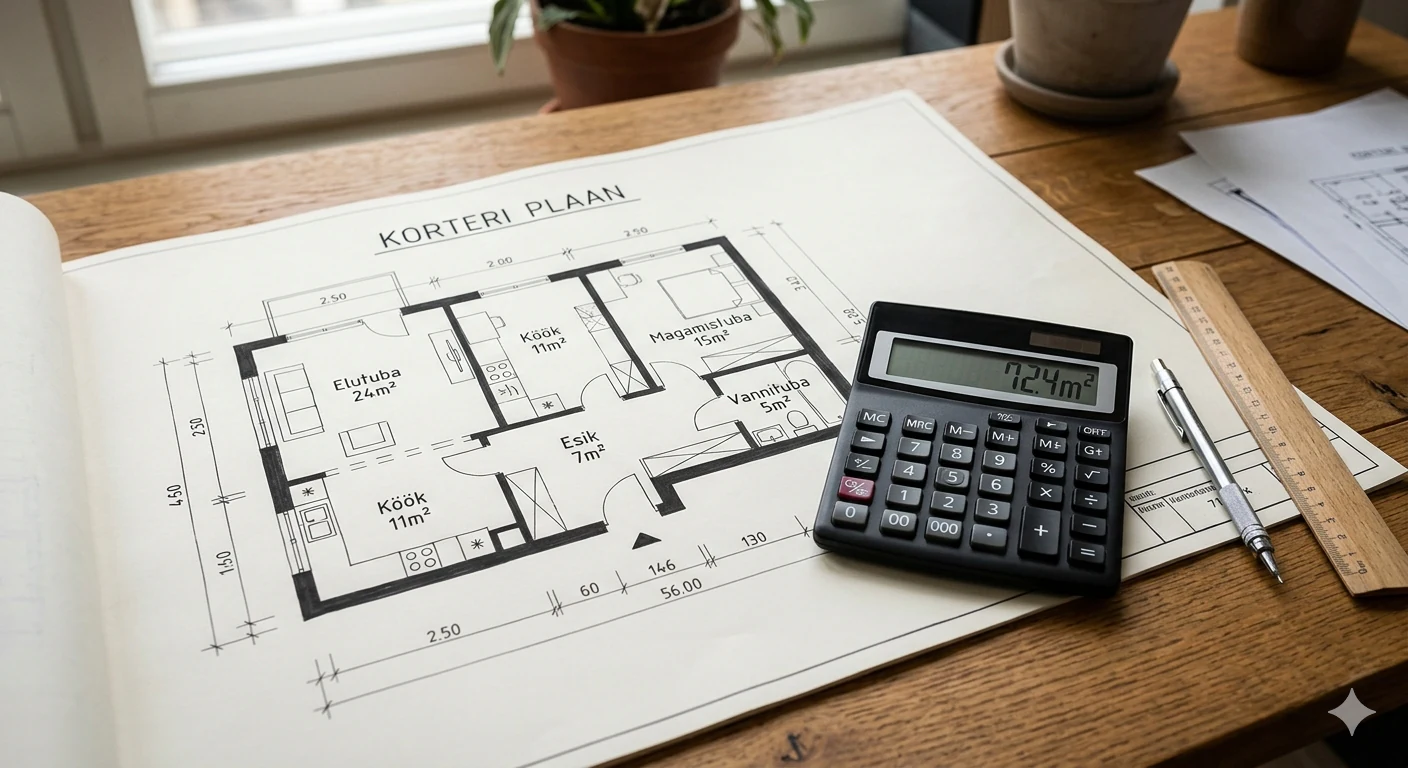
Property fast-sale price 2026 | How is it calculated?
How is the fast-sale price of an apartment calculated? A clear formula and examples from Tallinn and Tartu. Request an offer today!
Read more